




24/7 Support
Fast, professional support




















When a regular screen is dropped into a factory, a plant, or an outdoor control cabinet, it doesn’t last long. Heat, dust, moisture, chemicals, vibration, and bright sunlight quickly expose its limits. Industrial LCD panels are built specifically to survive in these harsh conditions and keep working when consumer displays would fail in weeks or even days.
Instead of focusing on pretty design or slim bezels, industrial displays focus on one thing: reliability in tough environments. They use rugged housings, sealed fronts, special components, and smart thermal design to stay readable and stable 24/7.
Let’s break down how they’re engineered from the inside out to handle these challenges.
At first glance, industrial LCD panels may look similar to a regular office monitor. But their design goals are very different.
A standard consumer screen is built for:
Industrial-grade LCD monitors are built for:
Key differences include:
In short, industrial displays are not just “heavy-duty monitors.” They are purpose-built harsh environment displays.
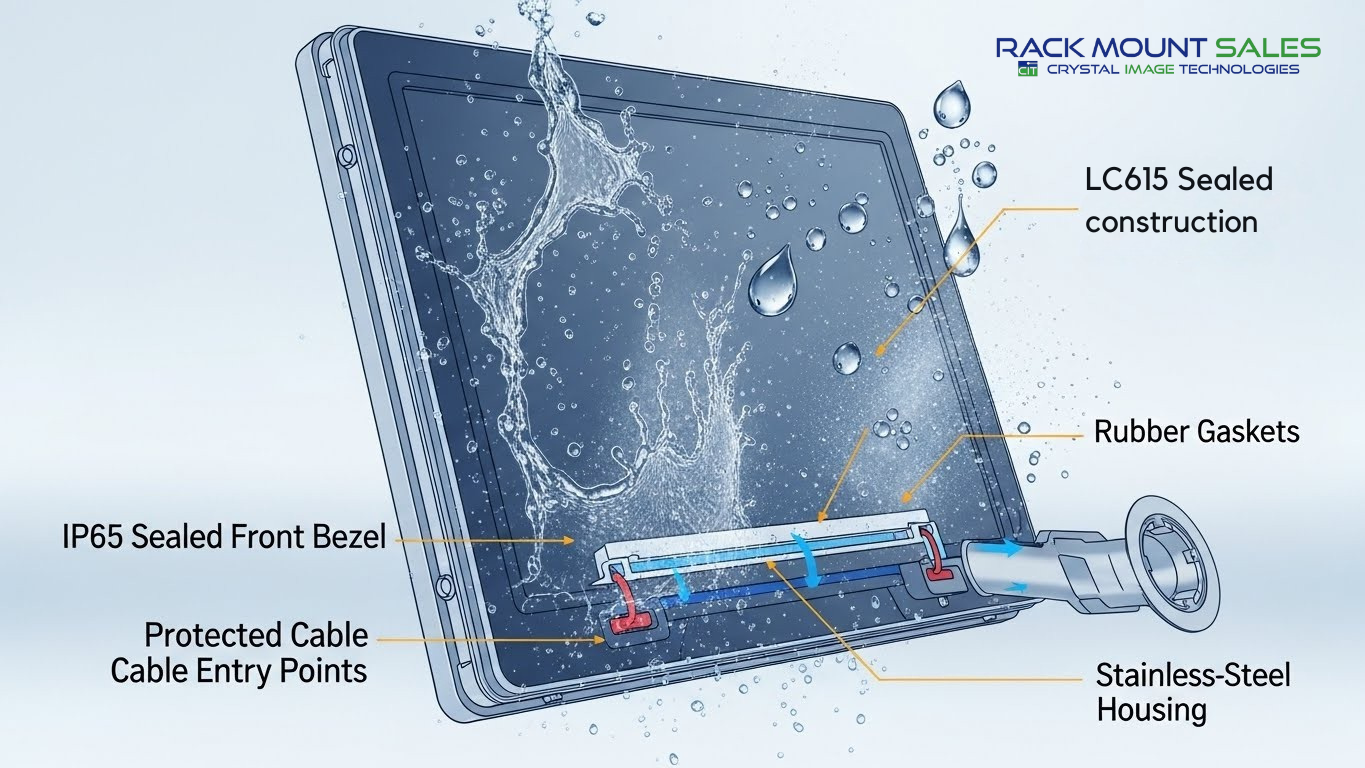
Dust, steam, oil, and cleaning chemicals are everyday realities in many industrial spaces. A normal monitor lets these elements seep inside over time, leading to corrosion, short circuits, and failure.
Many industrial LCD panels carry IP ratings, such as IP65, which indicate their level of protection against solids and liquids.
To achieve this, manufacturers use:
This level of sealing makes them suitable for:
These harsh environments can handle conditions that would destroy a normal office display in no time.
In some facilities, exposure to chemicals and cleaning agents is constant. That’s why many industrial-grade LCD monitors use:
This is especially important in:
The goal is simple: keep the display reliable even when the environment is not friendly to electronics.
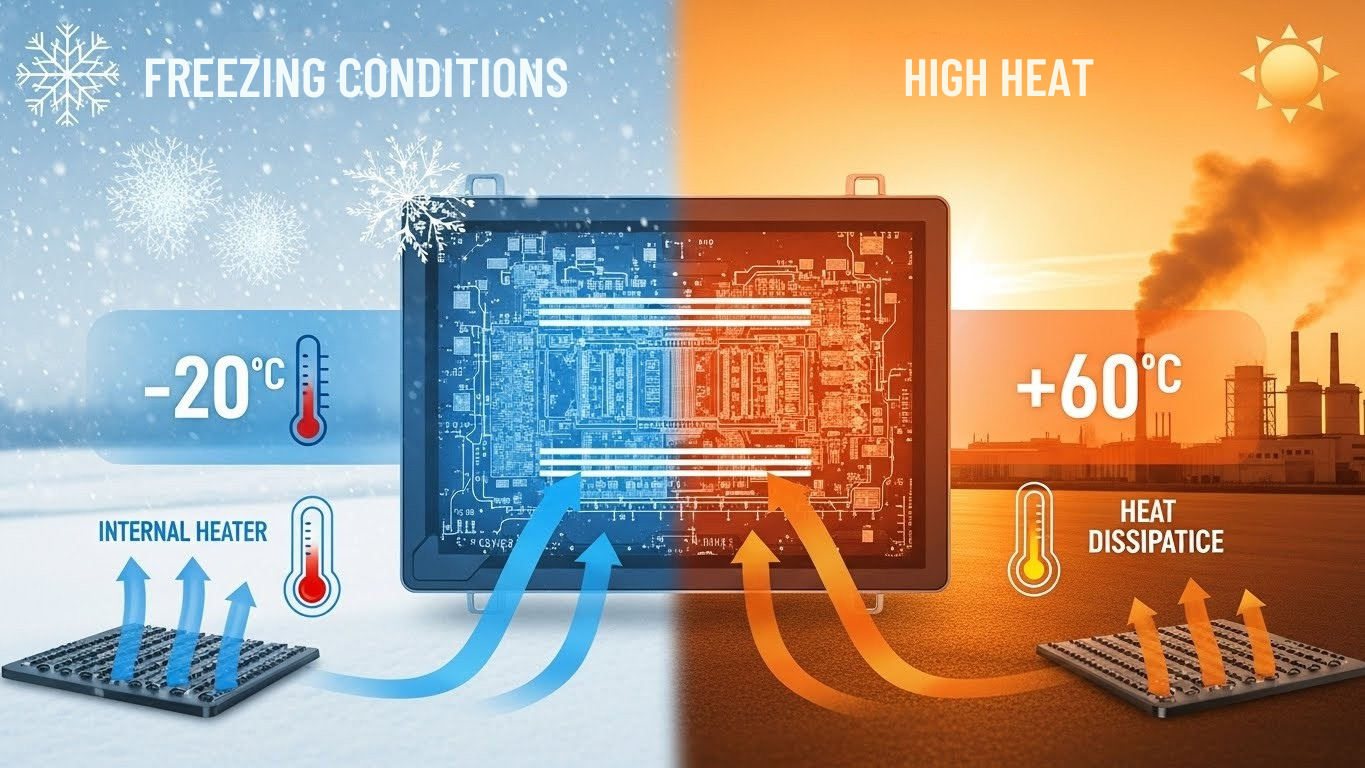
Industrial environments often push beyond normal room temperatures. You might have screens inside cold storage, near ovens, in hot outdoor cabinets, or exposed to changing weather all day.
Industrial LCD panels are designed to work in much wider temperature ranges than consumer screens. For example:
To make this possible, manufacturers select:
You don’t want your display to go black just because the sun hits the enclosure or a door stays open in the cold. Industrial panels are built to resist that.
In some setups, additional thermal help is built into the display design:
This combination of smart component choice and thermal design keeps the industrial LCD screen readable and stable even when the environment swings between temperature extremes.
Factories and vehicles are full of motion. Machines vibrate. Vehicles bounce. Heavy tools and materials move around constantly. A regular monitor is simply not built to survive in this kind of environment.
To handle this, rugged industrial LCD designs include:
This makes them suitable for:
Instead of slowly loosening or cracking over time, these displays are engineered to tolerate years of mechanical stress.
Another weak point in harsh conditions is often the cable connections, not the screen itself.
To protect this, industrial displays use:
The result is a more reliable system where you don’t have to chase down loose cables or intermittent connections constantly.
Bright light is another major enemy of readability. Outdoors or near large windows, a regular display quickly becomes washed out and hard to read.
To stay readable in bright or direct light, sunlight-readable industrial LCD designs use:
This kind of design is essential for:
Operators must be able to read values, warnings, and controls clearly, no matter what the sun is doing.
In industrial setups, people don’t always stand right in front of the display. They may be moving around, operating other equipment, or checking from a distance.
That’s why industrial LCD panels often focus on:
This is especially important for dashboards, HMIs, and status screens that are monitored by several people at once.
The front of the display is where human interaction and accidental impacts happen. In a harsh environment, it must be more than just a thin piece of plastic.
Many industrial LCD panels use:
This helps prevent cracks and breaks that would make the display unreadable or unsafe.
Touch input is extremely common in modern industrial systems, especially HMIs (Human-Machine Interfaces).
Industrial touch screen monitors typically use:
By combining robust glass with an industrial touch layer, manufacturers build interactive displays that can handle frequent use, even with gloved hands, and still withstand the environment around them.
Industrial systems often run around the clock. Stopping production or shutting down a machine just because a screen failed is expensive and stressful.
To handle this reality, industrial LCD panels use:
This focus on long-term reliability reduces unplanned downtime and maintenance. It also means that even if the upfront cost of an industrial-grade LCD monitor is higher, the total cost over its life is often lower than constantly replacing cheap displays.
Many industrial users look for hardware from specialized providers who understand these needs. For example, you can visit Rackmount Sales to explore industrial LCD panels designed specifically for demanding, 24/7 environments.
Industrial LCD panels are built from the ground up for real-world harsh conditions, places where dust, moisture, vibration, heat, cold, and bright light are part of everyday life. They use sealed enclosures, rugged housings, wide temperature components, strong front glass, and optimized brightness to stay readable and reliable no matter what’s happening around them.
While they may cost more than a consumer display, they pay off through fewer failures, less downtime, and safer, more efficient operations. In critical environments, you’re not just buying a screen, you’re buying confidence that your data, controls, and alarms will be visible and responsive whenever you need them.
Industrial LCD panels are built for tough environments, with sealed housings, wider temperature ranges, rugged mounting, and long-life components. Regular monitors are designed for clean indoor spaces and light use, so they usually fail quickly in harsh conditions.
Many industrial LCD panels are water-resistant, and some are effectively waterproof at the front, depending on their IP rating. Models with IP65 or higher ratings can handle splashes, spray, and washdowns on the front surface when properly installed. Always check the rating and mounting instructions for your specific use.
Yes. Industrial-grade LCD monitors are designed with components that operate in wide temperature ranges. Some models include heaters for extreme cold or special thermal designs for high-heat areas. This allows them to run reliably in freezers, hot factory floors, or outdoor enclosures.
Many industrial touch screen monitors are designed for glove use. Resistive touch screens work well with most glove types, while some projected capacitive (PCAP) screens are tuned to detect certain gloves. This makes them suitable for workers who need hand protection but still want responsive touch control.
Rugged industrial LCDs are used in factories, production lines, food processing plants, marine and offshore systems, outdoor kiosks, transport hubs, and vehicle-mounted systems. Anywhere a display must survive harsh conditions and still be readable and reliable, industrial LCD panels are the preferred choice.

Industrial LCD displays are built for heavy-duty environments like factories, warehouses, and outdoor terminals. They can handle heat, dust, vibration, and long operating hours.
Militarydev411

Downtime costs more than most people expect. When LCD monitor drawers fail inside a rack, teams lose access, waste time, and risk bigger hardware issues. Proper care keeps LCD monitordev411
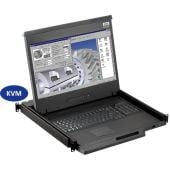
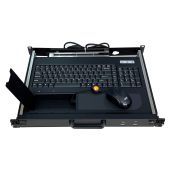
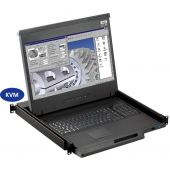
A rack mount monitor with KVM combines display, keyboard, and mouse into a single unit. This all-in-one design lets IT teams access multiple servers without juggling separate devices.dev411

We are so confident you will be satisfied with our products that we offer a 100% satisfaction guarantee


