




24/7 Support
Fast, professional support



















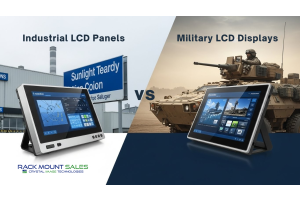
Industrial LCD displays are built for heavy-duty environments like factories, warehouses, and outdoor terminals. They can handle heat, dust, vibration, and long operating hours.
Military LCD displays go far beyond that; they’re engineered for mission-critical use in armored vehicles, aircraft, naval ships, and battlefield conditions. They offer stronger protection against shock, extreme temperatures, and electromagnetic interference, and often include features like night-vision compatibility and tactical-grade housings.
In simple words, industrial displays are rugged, and military displays are extreme-rugged with mission-level protection.
|
Feature |
Industrial LCD Display |
Military LCD Display |
|
Durability |
Rugged, built for factories & outdoor use |
Extreme ruggedness for battlefield and tactical vehicles |
|
Temperature Range |
Wide range (e.g., -10°C to 60°C) |
Very wide range (e.g., -30°C to 70°C or more) |
|
Shock & Vibration |
Withstands moderate shock |
Designed for harsh shock from vehicles, weapons fire, terrain |
|
Brightness |
High brightness for indoor/outdoor |
Ultra-high brightness + sunlight readable in all conditions |
|
Touchscreen Type |
Industrial resistive/capacitive |
Hardened, glove-friendly, impact-resistant |
|
EMI/EMC Protection |
Basic shielding |
Strong shielding, compliant with MIL-STD electromagnetic standards |
|
Power Stability |
Stable for industrial power systems |
Works with unstable vehicle/field power, wide DC input |
|
Certifications |
IP, IK, CE, FCC |
MIL-STD-810, MIL-STD-461, DO-160 |
|
Lifespan |
Long operational hours |
Built for long-term missions and continuous operation |
|
Cost |
Lower to medium |
High (due to testing, materials, and certifications) |

These are built for environments where dust, vibration, constant usage, and outdoor conditions are normal. They commonly appear in:
Industrial displays are ideal when ruggedness is required, but military-level environmental stress is not.
Military environments demand maximum reliability and protection in every scenario. These displays are used in:
Military displays must function perfectly in extreme temperatures, heavy shock, electromagnetic interference, and complete visibility under harsh sunlight or at night.
Industrial LCD Panels can handle wide temperature ranges, humidity, and moderate sunlight. They’re built for daily wear-and-tear, dust exposure, and vibration from machinery.
Military displays, however, are engineered for extreme heat, freezing cold, sandstorms, heavy shocks from off-road movement, and long-term exposure to sunlight or night operations.
In short:
Industrial = tough.
Military = built for survival.
Industrial displays come with basic EMI/EMC protection suitable for factories and commercial power environments.
Military displays include advanced shielding that prevents interference from radios, radar systems, weapons, and high-power communication devices.
This prevents the display from glitching or shutting down during a mission.
Industrial units typically use strong metal housings and sealed fronts for dust and water resistance.
Military displays use reinforced, tactical-grade enclosures made to survive impacts, harsh weather, corrosion, and even operational shocks from weapon recoil or vehicle movement.
They also include sealed, ruggedized connectors for secure field use.
Industrial displays expect a stable power supply from commercial equipment.
Military displays must operate on unstable battlefield power sources, wide DC input ranges, and sudden voltage drops, without failing.
They’re designed with an expectation: if the mission depends on the display, it cannot fail.
Industrial displays offer high brightness, anti-glare coatings, and a wide viewing angle for factory or outdoor use.
Military displays include features like sunlight-readable backlights, NVIS (night-vision goggle) compatibility, hardened touch layers, and ultra-high brightness for desert or open-field operations.
Industrial displays have long operating life and stable parts availability.
Military displays offer longer MTBF, extended lifecycle support, custom firmware options, and secure supply chains required for defense equipment.
When comparing industrial and military LCD displays, these key specifications determine how well the screen will perform in real conditions. Each spec below is written simply so buyers can understand what actually matters.
Industrial displays usually offer standard HD, Full HD, or 4K depending on the application.
Military displays focus less on ultra-high resolution and more on clarity, readability, and consistent performance under stress.
Higher brightness ensures the screen stays visible in harsh outdoor light.
A higher contrast ratio helps separate dark and light areas, making critical details more visible.
Military displays typically have enhanced contrast so soldiers can read maps or thermal overlays clearly.
Industrial displays provide wide viewing angles for operators standing at different positions.
Military displays maintain clarity even when viewed from sharp angles, which is essential in vehicles and command panels.
Industrial screens often come with IP65–IP67 ratings for water and dust resistance.
Military displays exceed this with sealed assemblies designed for total environmental protection.
Industrial displays use standard ports like HDMI, USB, DVI, or VGA.
Military displays use rugged connectors like MIL-DTL, locking connectors, and secure signal interfaces that won’t loosen due to vibration.
Certifications play a major role in determining whether a display is suitable for industrial or military use. These standards ensure reliability and safety.
Defines how well a display is protected against dust and water.
Common ratings: IP65, IP66, IP67
Measures the display’s resistance to mechanical impact, useful for factories, transportation hubs, and outdoor installations.
These certify that the display meets required electrical and safety standards for commercial environments.
The most important standard.
It includes tests for:
Military displays passing this standard are ready for real combat environments.
Focuses on electromagnetic interference. This ensures the display won’t fail when exposed to radios, radar systems, or battlefield communication equipment.
Used for aircraft and UAV displays. Covers altitude, vibration, lightning, RF interference, and air-pressure changes.
These certifications prove that military displays are built for survival under the toughest possible conditions.
Military displays undergo strict testing, use stronger materials, include advanced shielding, and meet expensive certification requirements. These factors significantly increase production cost, but guarantee mission-level reliability.
Industrial screens are perfect for:
If the environment isn’t exposed to extreme shock, weapon fire vibration, freezing cold, or battlefield interference, industrial displays are more than sufficient — and more cost-effective.
Military systems demand long-term availability of parts and stable supply chains.
Industrial displays are easier to replace, cheaper to service, and widely available.
This section shows practical differences that are easy for readers and buyers to relate to.
High-heat environments can cause industrial screens to dim or shut down if not properly cooled.
Factories with constant debris or fine particles can reduce touchscreen accuracy.
Sudden voltage drops from heavy equipment may temporarily shut down displays not built with power conditioning.
(These are rare, but they explain why military designs must be extreme.)
Nearby communication systems, radar, or high-power transmitters can disrupt unshielded screens.
Armored vehicles and off-road movement create massive vibration forces that consumer or industrial screens can't handle.
If the display isn’t NVIS-compliant, it can blind pilots or soldiers using night-vision gear.
This table helps buyers quickly see what features actually do and who benefits most from them.
|
Feature |
What It Does |
Who Needs It |
|
EMI/EMC Shielding |
Prevents interference from radios, radar, and high-power electronics |
Military vehicles, aircraft, control centers |
|
Wide Temperature Range |
Operates in extreme heat or cold without failure |
Industrial outdoor applications, battlefield conditions |
|
High Brightness |
Ensures readability under direct sunlight |
Outdoor kiosks, desert or open-field military operations |
|
NVIS Night Vision Support |
Maintains night vision compatibility |
Military pilots, tactical ground operations |
|
Hardened Touchscreen |
Glove-friendly, impact-resistant touch |
Military field units, industrial heavy machinery |
|
Reinforced Housing |
Survives shock, vibration, and impacts |
Armored vehicles, factories with heavy equipment |
|
Long-Term Support |
Firmware updates and spare parts have been available for years |
Military deployments, industrial automation systems |
Choosing the right LCD display depends on the environment, mission requirements, and budget. Here’s a simple decision guide:
By following this guide, buyers can confidently pick the right display for their application.
The rugged display industry is evolving rapidly, with innovations benefiting both industrial and military applications.
These trends show that investing in a high-quality display is not just about current needs but future-proofing.
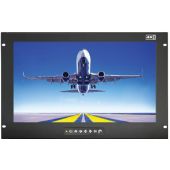
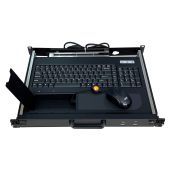
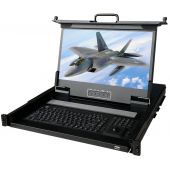
Rackmount integration makes it easier to manage displays in both industrial and military setups.
This section highlights how displays are not just standalone but part of a larger, mission-critical system.
Industrial and military LCD displays are both designed for reliability, but they serve very different environments. Industrial displays are rugged, cost-effective, and ideal for factories, warehouses, control rooms, and outdoor kiosks. They handle dust, vibration, moderate temperature changes, and long operational hours, making them perfect for commercial and industrial applications where extreme conditions are uncommon. Choosing the right industrial display ensures smooth operation, clear visibility, and long-term durability without unnecessary cost.
Military displays, on the other hand, are engineered for mission-critical use in the harshest conditions. They offer extreme shock, vibration, and temperature tolerance, advanced electromagnetic protection, and features like night-vision compatibility. Built to meet strict military certifications such as MIL-STD-810 and MIL-STD-461, these displays ensure reliability where failure is not an option. Understanding the environment, certification requirements, and performance needs is essential to selecting the right military display, guaranteeing safety, precision, and optimal performance in any mission.
Explore rugged industrial and military-grade LCDs built for the most demanding environments at RackmountSales.com.
Find the perfect display for your application today.
Industrial LCD displays are built for heavy-duty environments like factories, warehouses, and outdoor terminals. They can handle heat, dust, vibration, and long operating hours.
Militarydev411

Downtime costs more than most people expect. When LCD monitor drawers fail inside a rack, teams lose access, waste time, and risk bigger hardware issues. Proper care keeps LCD monitordev411
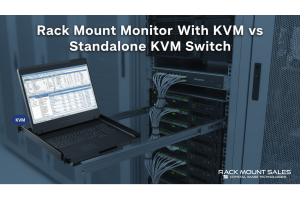
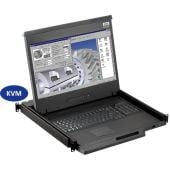
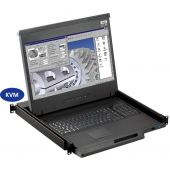
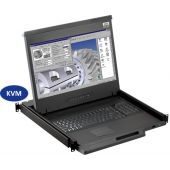
A rack mount monitor with KVM combines display, keyboard, and mouse into a single unit. This all-in-one design lets IT teams access multiple servers without juggling separate devices.dev411
We are so confident you will be satisfied with our products that we offer a 100% satisfaction guarantee


