




24/7 Support
Fast, professional support




















Choosing the wrong mounting option for industrial LCD panels can quietly create long-term problems, wasted space, difficult maintenance, poor visibility, and even downtime in critical operations. Whether you are designing a control room, building an automation system, or upgrading an IT rack, the decision between panel mount and rack mount industrial LCD panels directly impacts performance, scalability, and cost.
This guide is written for system integrators, IT managers, engineers, and industrial buyers who want clarity, not marketing fluff. We will break down how each mounting option works, where it performs best, and how to decide which one truly fits your environment.
Industrial environments are not forgiving. Displays are expected to run 24/7, survive heat, dust, vibration, and still remain readable and responsive. Mounting plays a major role in meeting these expectations.
At a high level, industrial LCD panels are installed in two primary ways:
Both options are purpose-built, but they serve very different operational needs. Choosing correctly means understanding how your display will be accessed, maintained, and protected over time.
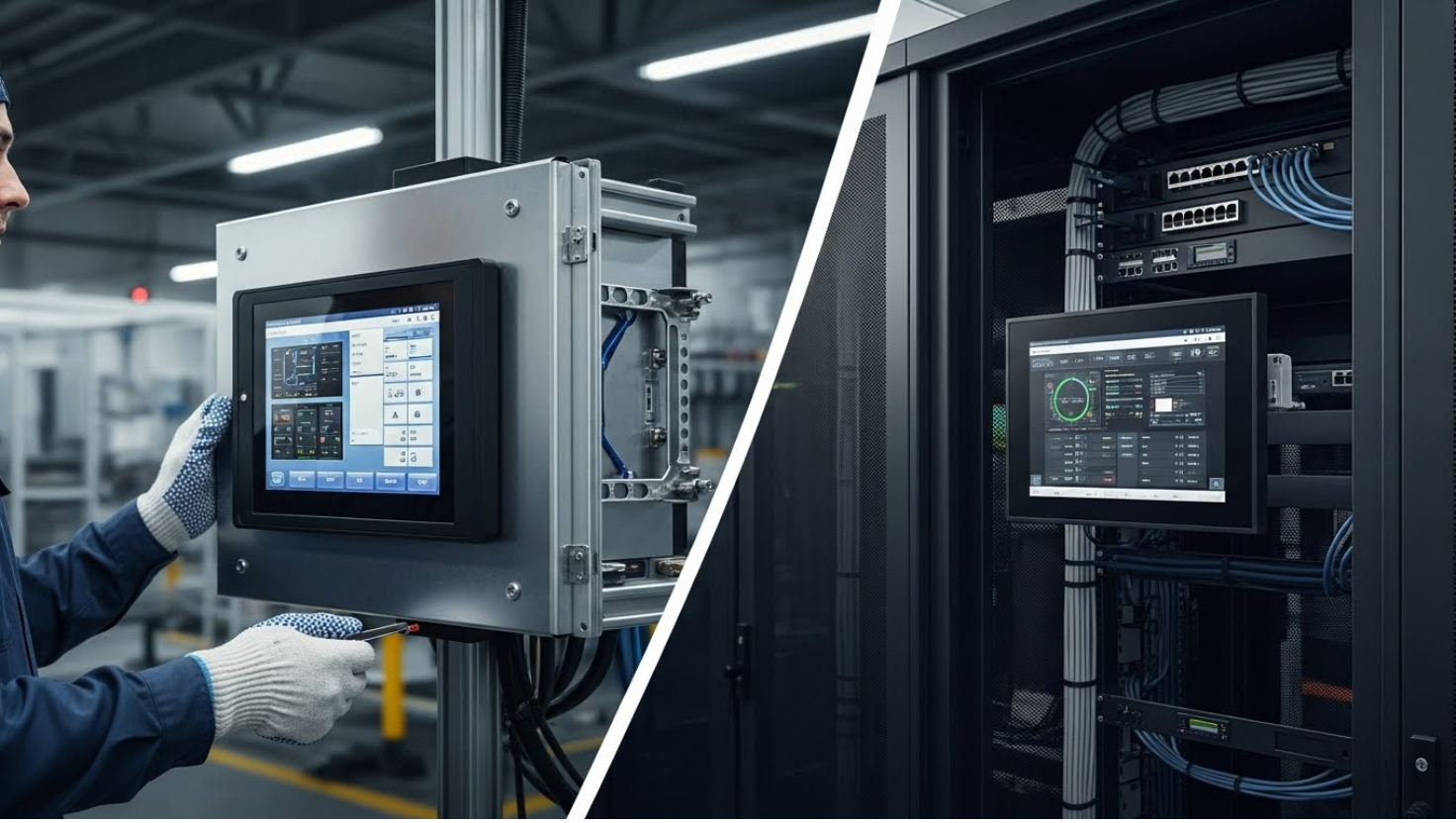
Panel-mount industrial LCD panels are designed to be flush-mounted into a cutout on a cabinet, machine housing, or control enclosure. Once installed, only the front bezel and screen remain visible, creating a clean and sealed interface.
These displays are commonly used where the LCD becomes part of the machine itself rather than a removable IT component.
Panel mount displays are built with durability and integration in mind. Common features include:
Because the front surface is sealed, panel-mount industrial LCD panels are ideal for environments where exposure to contaminants is unavoidable.
Panel-mount displays are typically used when the screen must feel like a permanent part of the system. Common applications include:
In these scenarios, operators interact with the display frequently, often wearing gloves or working in less-than-clean conditions. Panel mount designs excel here because they prioritize protection and reliability.
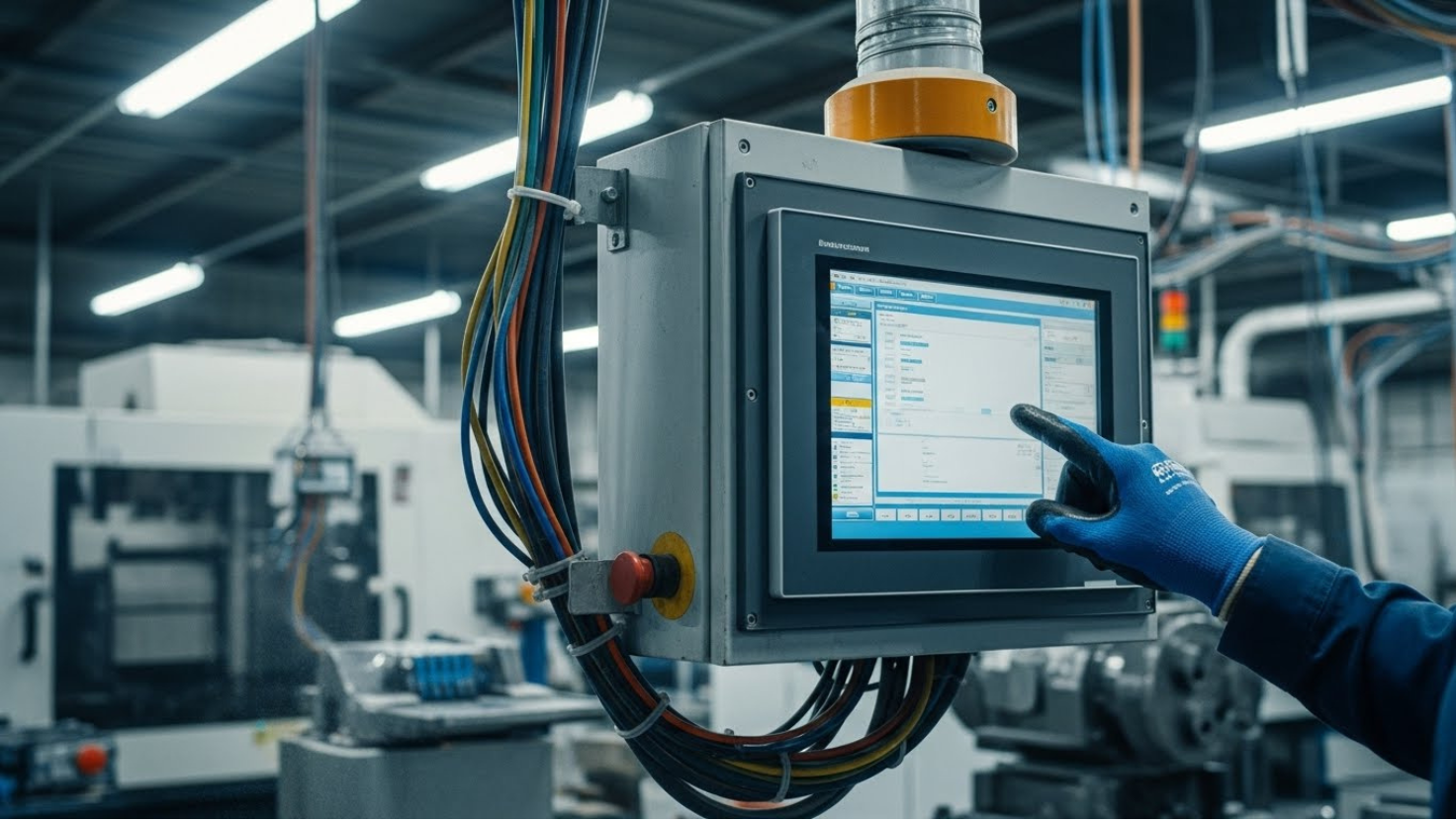
Choosing a panel mount display offers several clear benefits:
The sealed front bezel protects internal components from dust, moisture, oil, and debris. This significantly extends the lifespan of industrial LCD panels used on factory floors.
By embedding the display directly into an enclosure, panel mount solutions eliminate protruding hardware and reduce clutter.
Panel mount industrial LCD panels are optimized for touch input, making them perfect for HMIs and operator interfaces.
Despite their strengths, panel-mount industrial LCD panels are not always the best choice.
For static systems, these drawbacks are minor. For dynamic IT environments, they can become costly.
Many buyers focus only on screen size, resolution, or brightness. But mounting impacts:
This is where the difference between panel mount and rack mount industrial LCD panels becomes critical.
Rack-mount industrial LCD panels are purpose-built displays designed to fit directly into standard 19-inch equipment racks. Instead of becoming part of a machine enclosure, these displays become part of the rack infrastructure itself. They are installed using rack ears and occupy a defined number of rack units (U), just like servers, switches, or KVM systems.
This mounting style is dominant in environments where centralized control, fast access, and scalability matter more than sealed enclosures.
Rack mount displays are engineered for operational efficiency and serviceability. Typical features include:
Unlike panel mount displays, rack mount industrial LCD panels are designed to be installed, removed, or replaced without altering the surrounding infrastructure.
Rack mount displays excel in environments built around IT racks and centralized systems. Common use cases include:
In these setups, operators typically monitor multiple systems rather than interact with a single machine. Rack mount displays make this workflow faster and more organized.
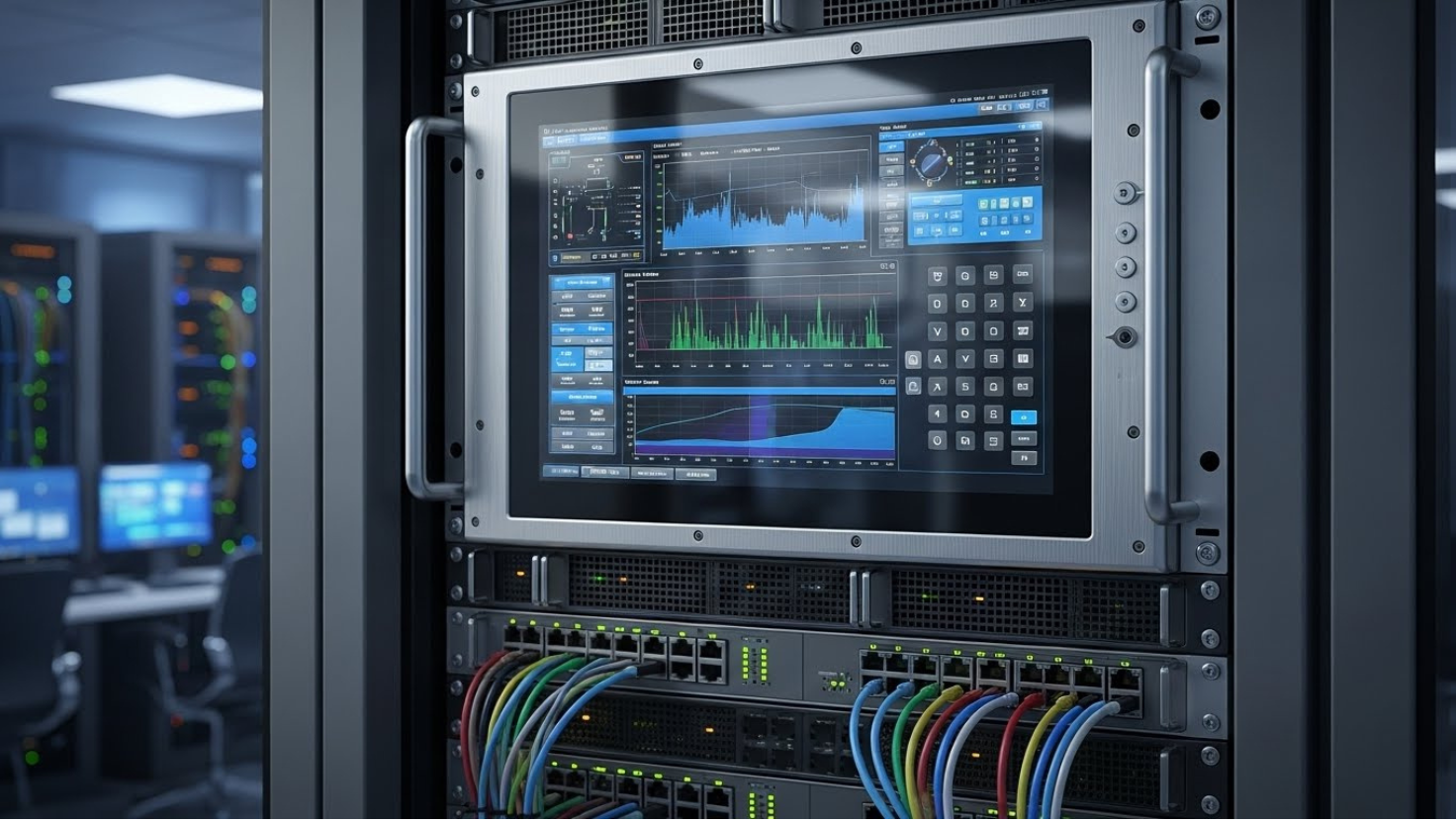
Rack mount LCD panels are installed just like any other rack device. This allows teams to scale systems quickly without custom fabrication or enclosure modifications.
Because the display is accessible from the front of the rack, technicians can replace or service it without shutting down entire systems. This is critical in mission‑critical environments.
Rack mount displays support centralized visibility. Operators can monitor servers, networks, and industrial processes from a single rack or control area.
Rack mount industrial LCD panels are commonly paired with LCD KVM switches, allowing one display to control and monitor multiple systems. This dramatically reduces hardware clutter and improves workflow.
While rack mount displays are extremely flexible, they are not ideal for every scenario.
For environments that require frequent touch input or exposure to contaminants, panel mount solutions may be a better fit.
The difference between rack mount and panel mount industrial LCD panels is not just physical, it affects daily operations.
Rack mount displays are optimized for:
Panel mount displays are optimized for:
Understanding this operational split helps avoid costly mismatches.
In control rooms and data centers, priorities are clear:
Rack mount industrial LCD panels meet these needs by aligning perfectly with rack-based infrastructure. They reduce complexity while improving response time during critical events.
When choosing between panel mount and rack mount industrial LCD panels, seeing the differences clearly makes decision‑making easier. While both are built for industrial reliability, their strengths serve very different operational needs.
Panel Mount Industrial LCD Panels
Rack Mount Industrial LCD Panels
This comparison alone eliminates most wrong purchases.
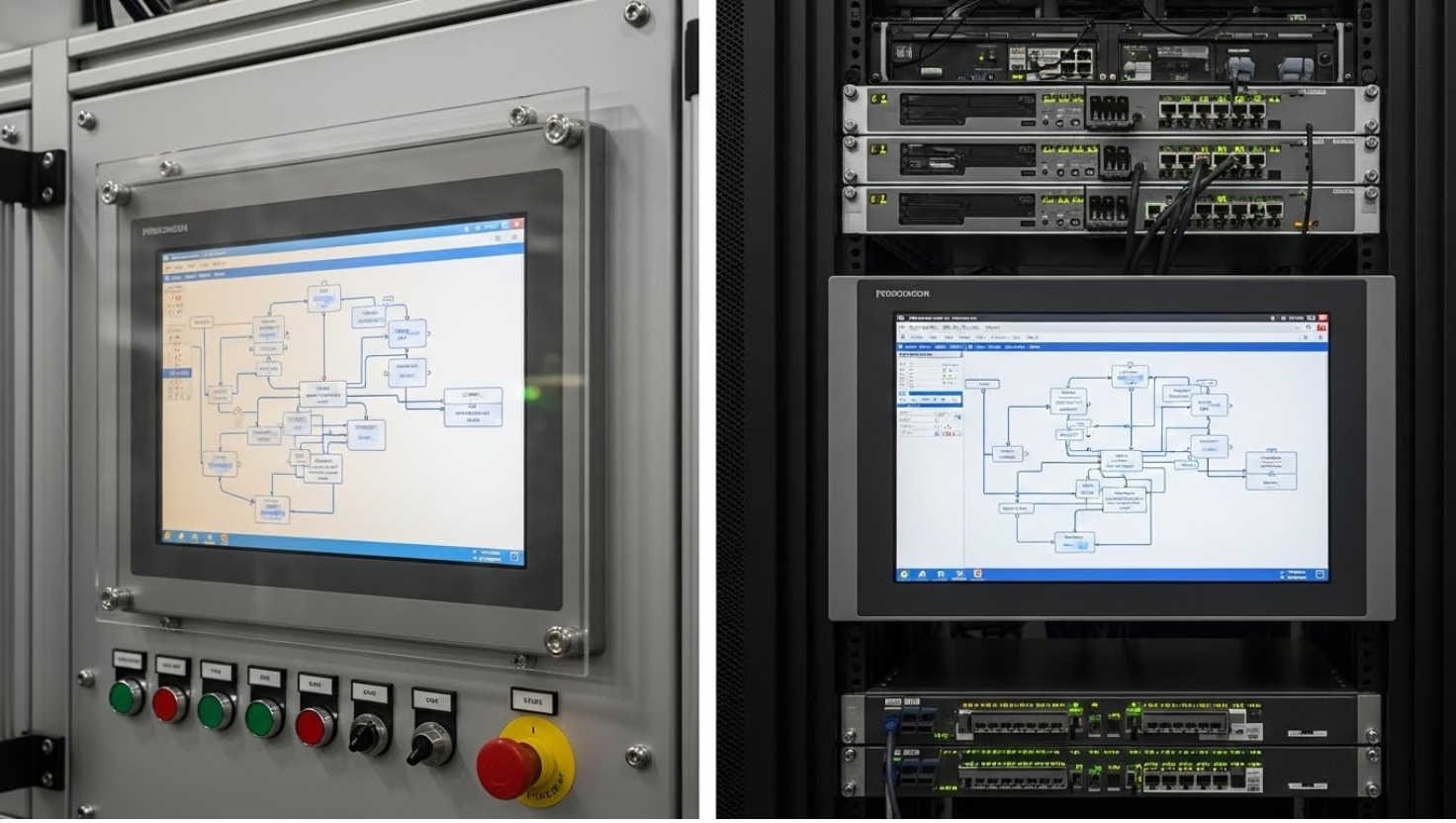
The correct choice depends on how and where the display will be used, not just technical specifications.
Making this decision early prevents redesigns and costly downtime later.
In rack‑based environments, industrial LCD panels and KVM switches often work together as a single control solution. A rack mount LCD paired with a KVM switch allows operators to:
This setup is common in data centers, broadcast facilities, and security operations where speed and visibility are critical.
Many industrial buyers make avoidable mistakes when selecting LCD panels:
Avoiding these mistakes protects both performance and investment.
Yes. Panel mount displays are typically more durable in harsh environments due to sealed front bezels and fanless designs.
Yes. They are commonly used in broadcast racks, control rooms, and industrial monitoring systems.
Panel mount industrial LCD panels are better suited for frequent touch interaction.
They optimize vertical rack space but consume rack units, which must be planned carefully.
There is no universal answer when choosing between panel mount and rack mount industrial LCD panels. Each serves a specific purpose.
Panel mount solutions excel in machine‑level control and harsh environments. Rack mount solutions dominate centralized, IT‑driven infrastructures where flexibility and uptime matter most.
The best choice is the one that aligns with your application, environment, and long‑term operational goals.
Choosing correctly today means fewer problems tomorrow, and a display system that works as hard as the environment it supports.

Industrial LCD displays are built for heavy-duty environments like factories, warehouses, and outdoor terminals. They can handle heat, dust, vibration, and long operating hours.
Militarydev411

Downtime costs more than most people expect. When LCD monitor drawers fail inside a rack, teams lose access, waste time, and risk bigger hardware issues. Proper care keeps LCD monitordev411

A rack mount monitor with KVM combines display, keyboard, and mouse into a single unit. This all-in-one design lets IT teams access multiple servers without juggling separate devices.dev411










We are so confident you will be satisfied with our products that we offer a 100% satisfaction guarantee


