




24/7 Support
Fast, professional support




















Artificial intelligence is changing the way modern data centers work. From machine learning systems to advanced automation and real-time analytics, AI-powered infrastructure now handles workloads that are far more demanding than traditional computing environments. As companies continue investing in AI technologies, the pressure on data center hardware keeps growing.
But while people often talk about GPUs, storage systems, and servers, one important component gets overlooked: high-performance rackmount displays.
In AI environments, where thousands of processes run simultaneously and system performance needs constant monitoring, having the right display system is not just useful; it becomes essential. Traditional monitoring solutions often struggle to keep up with the speed, complexity, and real-time visibility required in AI-driven facilities.
This is why many organizations are now adopting advanced rackmount displays for data centers to improve server management, reduce downtime, and simplify infrastructure monitoring.
Traditional data centers were mainly built to handle storage, networking, hosting, and business applications. While these systems still require strong monitoring, AI data centers work on a completely different scale.
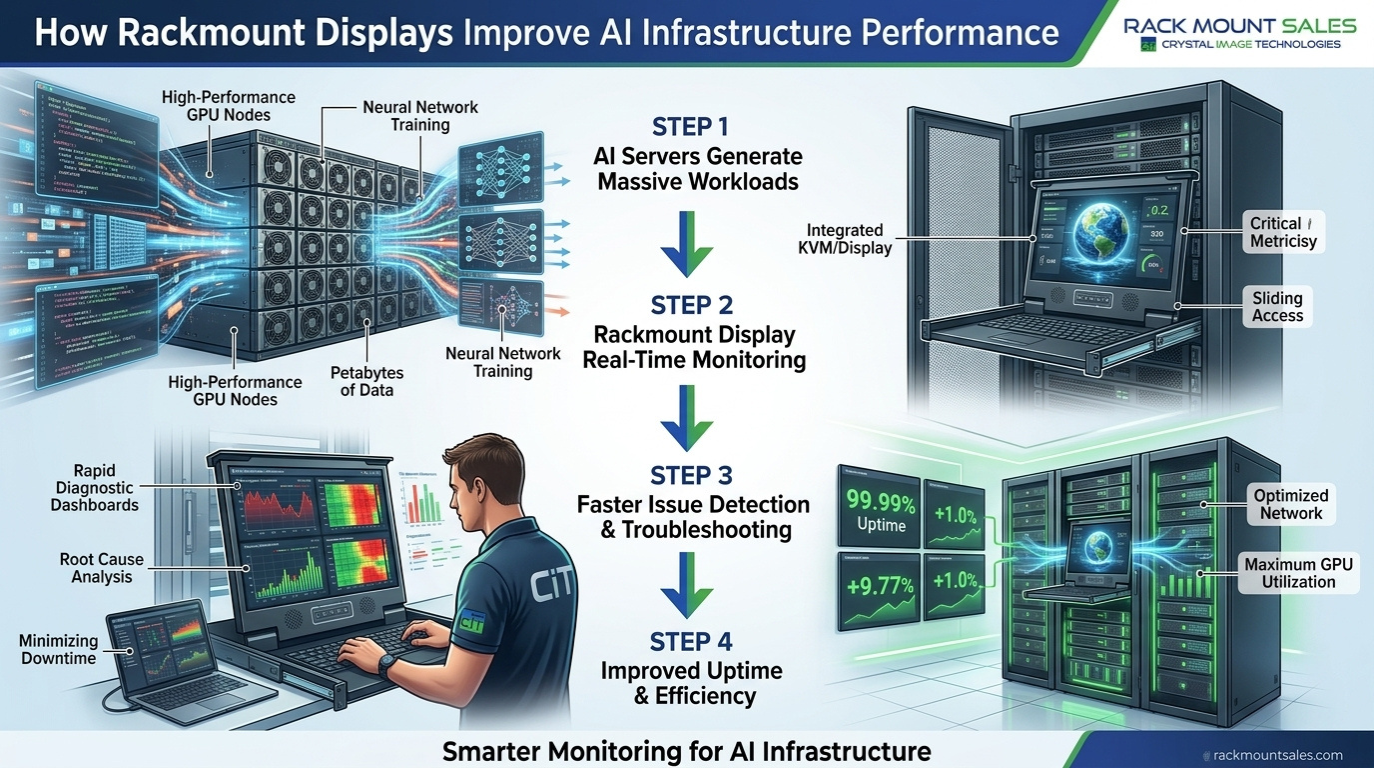
AI workloads process massive amounts of information in real time. Whether training language models, analyzing customer behavior, or powering automation systems, AI servers demand significantly more computing power.
This creates several challenges:
Unlike standard environments, AI facilities cannot afford delays when monitoring system activity. Even small performance issues can affect workloads, reduce efficiency, or slow processing speed.
Because of this, IT teams need quick access to multiple systems at once. A simple standalone monitor is no longer enough. Instead, many organizations rely on high-performance rackmount displays that provide centralized visibility for server operations.
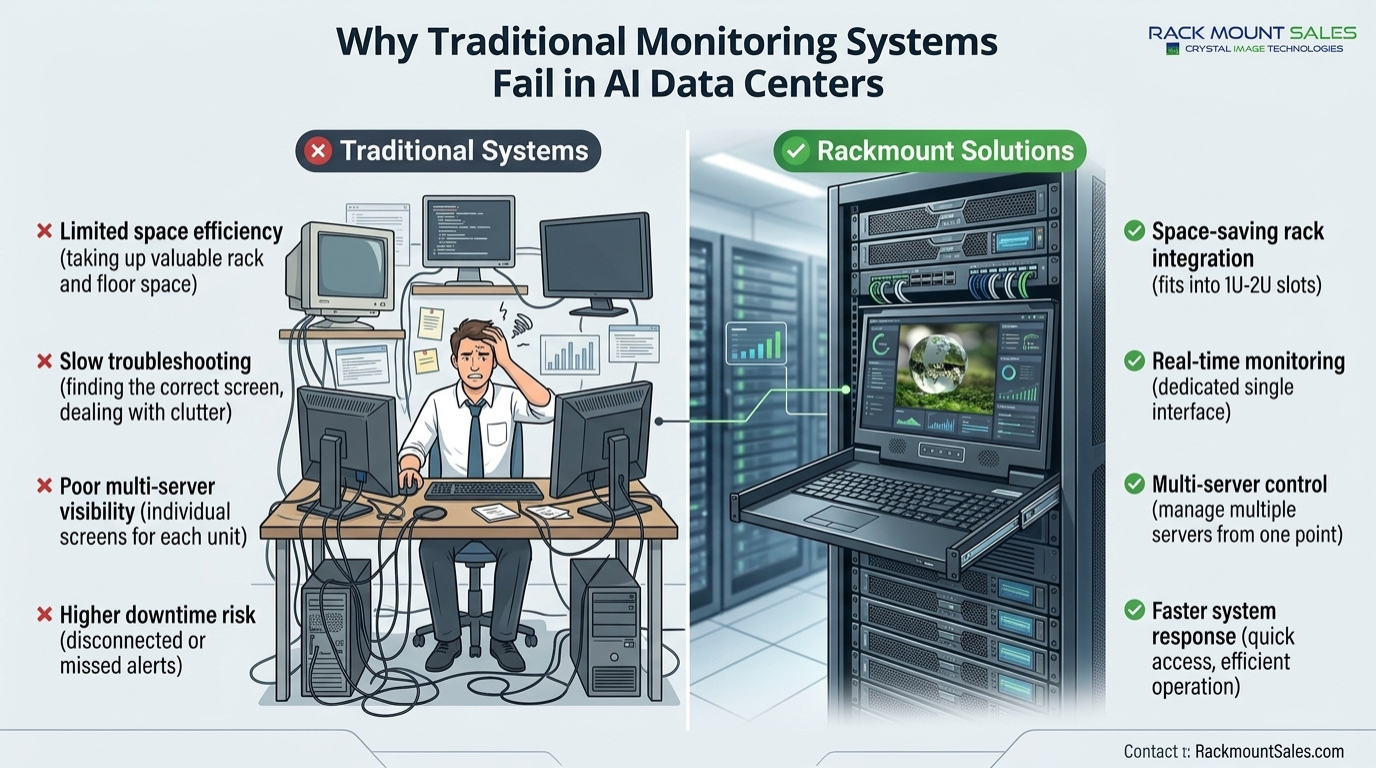
Many older data centers still depend on standard desktop monitors or outdated display systems for monitoring servers. While these setups worked in the past, AI infrastructure creates new requirements that traditional systems struggle to handle.
AI server rooms often contain high-density rack systems packed with powerful computing hardware. Standard monitors take up valuable workspace and create cable clutter.
Rackmount monitors solve this issue by fitting directly into server racks, allowing IT teams to save space while keeping monitoring systems organized.
Instead of placing multiple external screens around the room, technicians can access servers through compact rack-mounted solutions designed specifically for high-performance environments.
AI workloads rarely operate on one machine. Most environments involve several servers working together at the same time.
Traditional displays make it harder to monitor multiple systems efficiently, especially in larger server rooms. IT administrators may need to switch between devices repeatedly, slowing response time during critical operations.
Modern rackmount monitor for server rooms solutions support multi-server visibility, helping teams monitor workloads more effectively.
AI infrastructure often runs continuously without interruption. A monitoring delay or system oversight can create unexpected downtime, affecting productivity and increasing operational costs.
Traditional setups may not provide the fast access and visibility needed for rapid troubleshooting.
This is where AI server monitoring tools paired with rackmount displays become highly valuable. Quick visibility means faster problem detection and fewer disruptions.
As AI infrastructure becomes more advanced, data centers need equipment that can support constant monitoring, reliability, and fast decision-making.
A high-performance rackmount display helps IT professionals manage multiple servers while maintaining full visibility of system performance.
These displays are designed to work directly inside server racks, making them ideal for environments where space, accessibility, and efficiency matter.
In AI-driven facilities, rackmount displays support operations by helping teams:
AI applications often process large workloads around the clock. Administrators must watch GPU performance, server health, cooling systems, and network activity at all times.
A high-quality rackmount monitor makes it easier to track everything from one place.
Instead of moving between several workstations, technicians can monitor systems more efficiently using integrated display solutions.
When issues appear inside AI environments, fast action matters.
Performance bottlenecks, overheating, failed processes, or network disruptions require immediate attention. Rackmount displays provide direct system access, helping IT teams identify and resolve problems quickly.
Faster monitoring often means reduced downtime and smoother operations.
Modern AI facilities continue increasing server density to meet growing computing demands.
However, more equipment means less available space.
This is where rackmount displays for data centers become extremely useful. Since they fit inside server cabinets, they reduce clutter and help teams maximize infrastructure space without sacrificing accessibility.
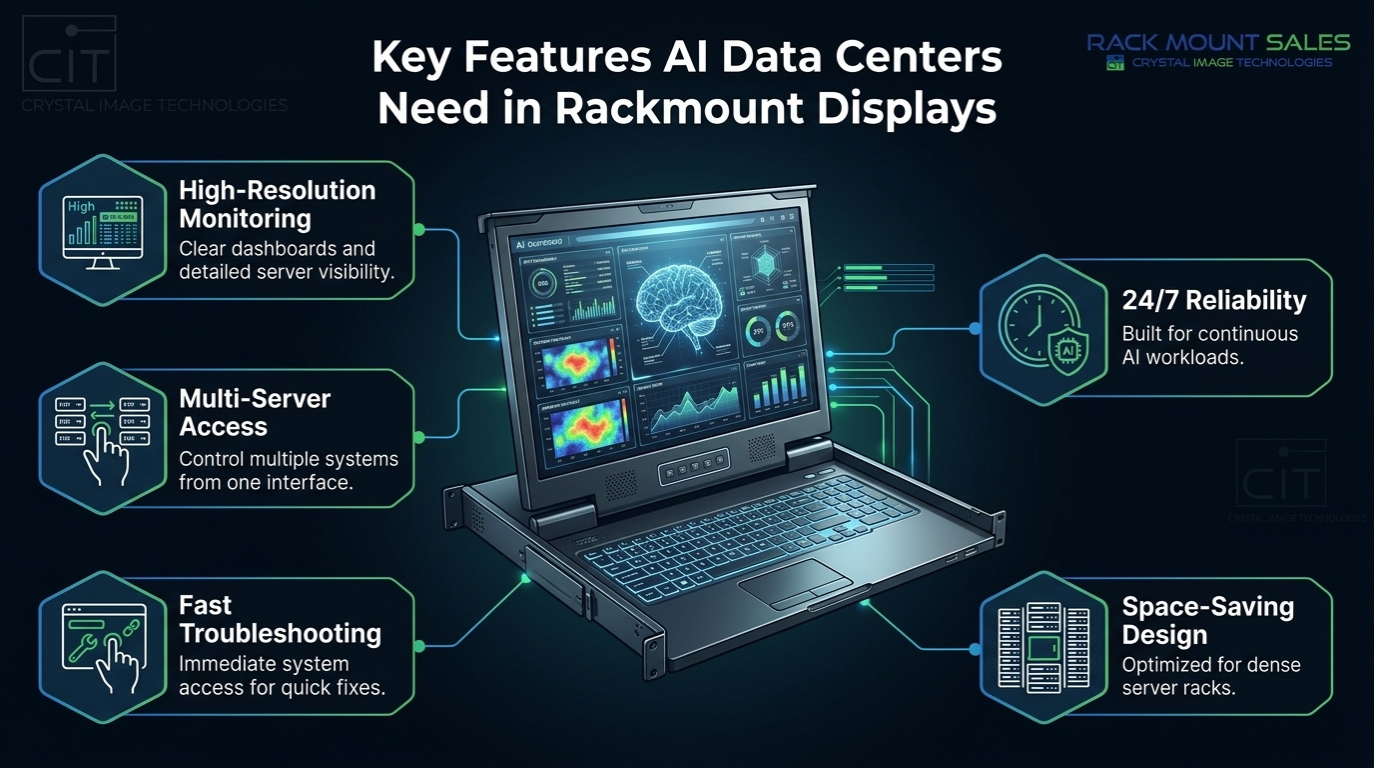
Not every display system works well inside an AI-driven environment. Since workloads are demanding and server monitoring is constant, organizations need features designed for enterprise-level performance.
AI systems generate large amounts of data, logs, dashboards, and monitoring visuals.
A low-quality screen can make it harder to track important metrics or detect system issues.
High-resolution displays improve visibility by showing clearer images, sharper text, and better dashboard readability.
This helps IT teams monitor server performance with greater accuracy.
AI facilities often operate dozens or even hundreds of servers simultaneously.
Managing everything through one screen becomes difficult without proper support for multiple systems.
Many high-performance rackmount displays integrate with KVM functionality, allowing administrators to access several servers from one interface.
This improves workflow and saves valuable time.
AI data centers rarely stop running.
Since systems often work around the clock, display equipment must handle long operational hours without performance issues.
High-quality rackmount displays are designed for continuous use, making them suitable for demanding server environments where reliability matters.
One major advantage of rackmount systems is efficient space usage.
Instead of separate monitors occupying desks or control stations, rackmount displays fit directly into server racks.
This creates cleaner server rooms and improves equipment organization.
For AI facilities handling growing infrastructure demands, space optimization becomes increasingly important.
AI systems move fast.
Unlike traditional workloads, AI processes often require continuous adjustments, monitoring, and optimization. Small delays in spotting issues can affect processing speed or system efficiency.
Having better visibility into infrastructure helps IT teams stay ahead of problems before they grow into larger failures.
This is one reason why many organizations are upgrading to data center monitoring solutions built around high-performance rackmount technology.
As AI adoption continues growing, the need for smarter monitoring tools will only become more important.
Managing an AI data center is far more complex than handling traditional IT infrastructure. AI systems often involve GPU-heavy workloads, real-time processing, machine learning training, and massive amounts of data moving across servers every second.
Without proper visibility, managing this kind of environment becomes difficult.
This is where high-performance rackmount displays make a major difference.
By giving IT teams centralized access to systems, these displays help simplify monitoring and improve operational control.
In AI environments, timing matters.
A sudden performance drop, overheating server, or processing delay can impact workloads almost immediately. Rackmount displays allow technicians to access systems directly from the server rack without wasting time moving between workstations.
This faster access improves response times and helps prevent larger infrastructure problems.
For organizations handling sensitive AI operations, speed can make a major difference in performance and reliability.
AI data centers often rely on clusters of interconnected systems rather than single machines.
Instead of monitoring servers individually, IT administrators can use rackmount displays for data centers to manage several systems from one location.
When combined with KVM functionality, administrators gain centralized access to multiple servers through a single interface.
This improves workflow, reduces complexity, and makes troubleshooting much easier.
When teams switch between multiple monitors or systems manually, mistakes become more likely.
Missing alerts, opening the wrong system, or delayed responses can create operational risks.
A well-organized rackmount setup simplifies server management and reduces unnecessary complexity, helping teams work more efficiently.
In fast-moving AI environments, reducing human error becomes especially important.
As AI infrastructure continues growing, businesses face new technical challenges that traditional systems were never designed to handle.
Fortunately, the right monitoring setup can solve many of these problems.
AI facilities often maximize space by installing more hardware into smaller environments.
However, high-density server racks create monitoring difficulties.
Too many standalone displays can lead to clutter, poor organization, and inefficient workflows.
How rackmount displays help:
Rack-integrated displays save space while giving administrators direct access to server systems. This allows cleaner installations and more organized infrastructure.
AI workloads run around the clock.
Unlike traditional workloads that may slow down overnight, AI applications often require constant uptime.
This means IT teams must continuously monitor:
How rackmount displays help:
A dedicated rackmount monitor for server rooms improves visibility and makes it easier to monitor critical metrics in real time.
When problems occur inside AI systems, delays can become expensive.
A failed process or overheating system can reduce performance or interrupt workloads.
How rackmount displays help:
Immediate access to server information helps teams identify and solve problems faster, minimizing downtime and operational disruptions.
AI environments rarely stay the same for long.
As businesses grow, infrastructure expands quickly.
Adding more hardware often increases management complexity.
How rackmount displays help:
Scalable rackmount monitoring systems adapt more easily to expanding server environments, helping organizations grow without creating unnecessary monitoring challenges.
The future of AI infrastructure is moving fast, and display technology is evolving with it.
Organizations are beginning to demand smarter monitoring systems that offer more efficiency, flexibility, and control.
Here are some trends shaping the future of AI server monitoring and rackmount technology.
As dashboards become more advanced, operators need displays that show more detailed information.
Future rackmount monitors will likely continue improving resolution quality, making it easier to analyze complex AI workloads.
Clearer visuals help teams detect issues faster and manage systems more effectively.
Modern data centers increasingly support remote operations.
IT administrators often manage infrastructure from different locations instead of staying inside server rooms all day.
Future data center monitoring solutions will likely integrate stronger remote access capabilities for improved flexibility.
AI facilities consume enormous amounts of power.
As businesses focus more on sustainability, energy-efficient hardware will become increasingly important.
Rackmount displays designed for lower power consumption may help organizations reduce operational costs over time.
Interestingly, AI itself may help improve monitoring.
Future display systems could integrate more intelligent alert systems, predictive monitoring, and automated diagnostics to help IT teams manage infrastructure more efficiently.
Not every rackmount display is suitable for demanding AI environments.
Before making a decision, businesses should focus on features that support long-term performance.
Clear visuals matter when monitoring multiple systems.
Choose displays with sharp image quality that make dashboards, analytics, and server information easy to read.
Always make sure the display works with your server rack environment.
Depending on infrastructure requirements, businesses may prefer 1U or 2U rackmount solutions.
For organizations managing multiple systems, KVM integration can greatly improve efficiency.
A display that supports centralized server access simplifies management and reduces equipment clutter.
AI environments often run 24/7.
Reliable hardware reduces downtime risks and supports long-term operational stability.
Choosing durable, enterprise-grade solutions is usually the better long-term investment.
AI data centers are transforming how businesses process information, automate operations, and scale digital infrastructure. However, with more computing power comes greater complexity.
Traditional monitoring methods are no longer enough for environments that depend on constant uptime, fast troubleshooting, and real-time visibility.
This is why high-performance rackmount displays have become increasingly important in modern AI infrastructure.
From improving server access to simplifying multi-system monitoring, these displays help IT teams manage demanding environments more efficiently.
Organizations looking to improve server visibility and streamline monitoring often explore specialized rackmount solutions available through Rackmount Sales to support evolving data center requirements.

Industrial LCD displays are built for heavy-duty environments like factories, warehouses, and outdoor terminals. They can handle heat, dust, vibration, and long operating hours.
Militarydev411

Downtime costs more than most people expect. When LCD monitor drawers fail inside a rack, teams lose access, waste time, and risk bigger hardware issues. Proper care keeps LCD monitordev411

A rack mount monitor with KVM combines display, keyboard, and mouse into a single unit. This all-in-one design lets IT teams access multiple servers without juggling separate devices.dev411










We are so confident you will be satisfied with our products that we offer a 100% satisfaction guarantee


