




24/7 Support
Fast, professional support




















Harsh environments break ordinary equipment fast. Dust clogs vents. Vibrations loosen internal parts. Extreme heat fades screens, while freezing temperatures slow electronics. In these conditions, standard monitors simply do not survive long. This is exactly where Rugged Portable Displays prove their value.
These specialized displays are designed to operate where traditional monitors fail. Engineers, military teams, field technicians, and emergency responders rely on them to access critical data in remote and demanding locations. Whether mounted inside mobile command centers or used in outdoor inspection tasks, rugged displays deliver reliable performance when systems cannot afford downtime.
Industries that work in challenging environments need display solutions that are portable, durable, and dependable. Rugged Portable Displays provide all three, making them a key part of modern harsh environment computing.
Many industries operate in locations that push hardware to its limits. Field engineers may work in dusty construction zones. Military personnel may deploy technology in desert heat or freezing mountains. Oil and gas technicians often rely on digital monitoring systems while working in offshore rigs or remote drilling sites.
Standard commercial monitors are built for offices and controlled environments. They are not designed to handle:
In these situations, traditional monitors can fail quickly. Screens may crack, internal connections loosen, or brightness becomes too weak for outdoor visibility.
Rugged Portable Displays are engineered specifically to solve these problems. Their reinforced construction and specialized components allow them to continue working even in the most demanding conditions.
This reliability is critical for field operations where equipment failure can delay projects, increase costs, or even put safety at risk.
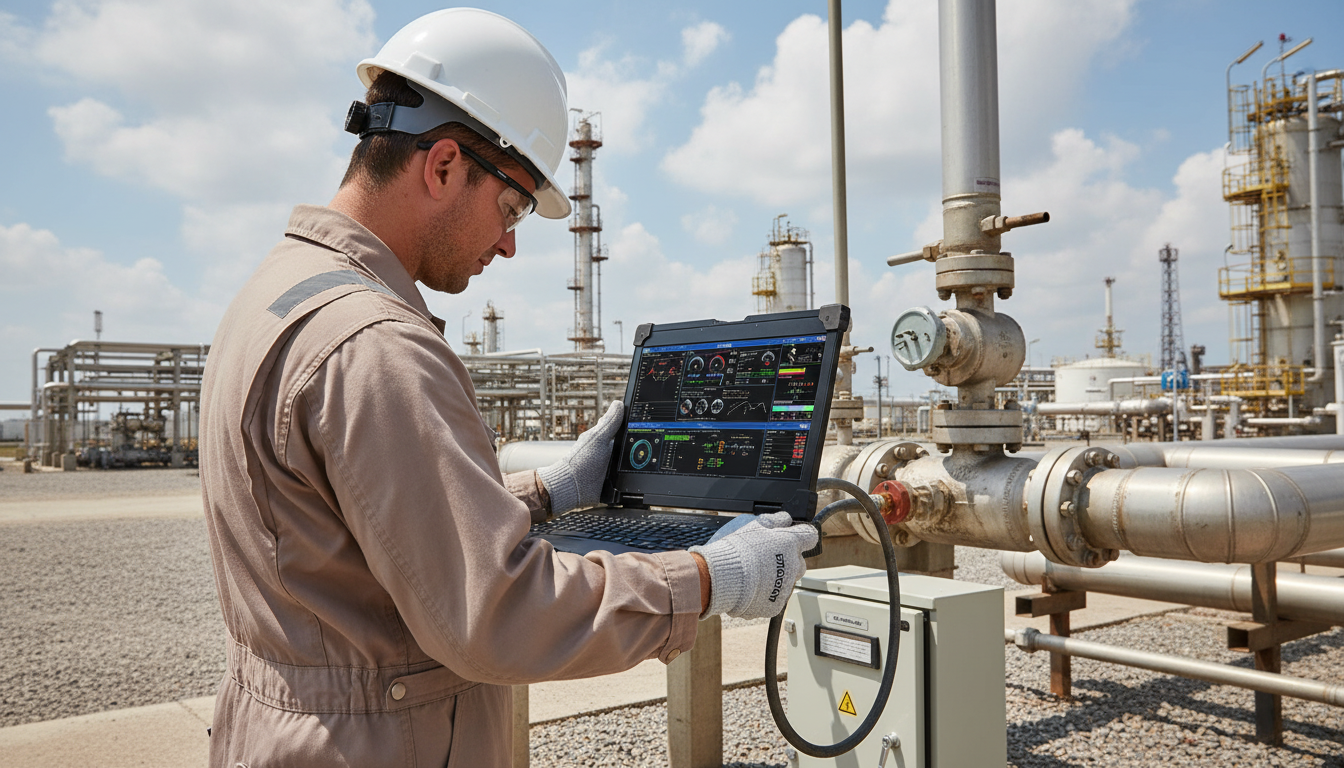
Rugged displays are built differently from standard monitors. Their design focuses on durability, portability, and consistent performance in unpredictable environments.
Several features make them ideal for harsh environment computing.
Field equipment is constantly moved, transported, and deployed in dynamic environments. Vehicles, heavy machinery, and mobile command centers generate continuous vibration that can damage delicate electronics.
Rugged Portable Displays use reinforced frames and shock-absorbing internal structures to protect sensitive components. This design allows them to operate safely even when mounted inside moving vehicles or mobile workstations.
Many rugged displays are also tested against strict industrial and military standards for vibration resistance. This ensures the system remains operational during transport, deployment, and field operations.
One of the biggest challenges with regular monitors is outdoor visibility. Bright sunlight can make screens difficult to read, forcing operators to move equipment into shade or cover displays with protective shields.
Rugged Portable Displays solve this problem with high-brightness panels designed for outdoor use. These displays offer significantly higher brightness levels than standard monitors, allowing users to view information clearly even under direct sunlight.
For field technicians, this means faster diagnostics, better situational awareness, and improved productivity. Instead of struggling to read screens, teams can focus on the task at hand.
Temperature changes can seriously affect electronic equipment. Some systems stop working in cold weather, while excessive heat can cause overheating or internal damage.
Rugged displays are designed with components that tolerate a much wider temperature range. They can function reliably in freezing outdoor environments as well as high-heat industrial settings.
This capability makes them ideal for industries such as:
Reliable operation in extreme temperatures ensures teams always have access to the data they need.
Harsh environments often expose equipment to dust, moisture, and debris. Over time, these elements can damage internal components and cause system failures.
Rugged Portable Displays are built with sealed enclosures that protect sensitive electronics from environmental hazards. Many models include advanced protection ratings that guard against both dust and water exposure.
This level of protection is especially important for outdoor work sites, disaster response operations, and industrial environments where airborne particles are common.
The result is a display system that remains functional even in challenging weather or high-risk environments.
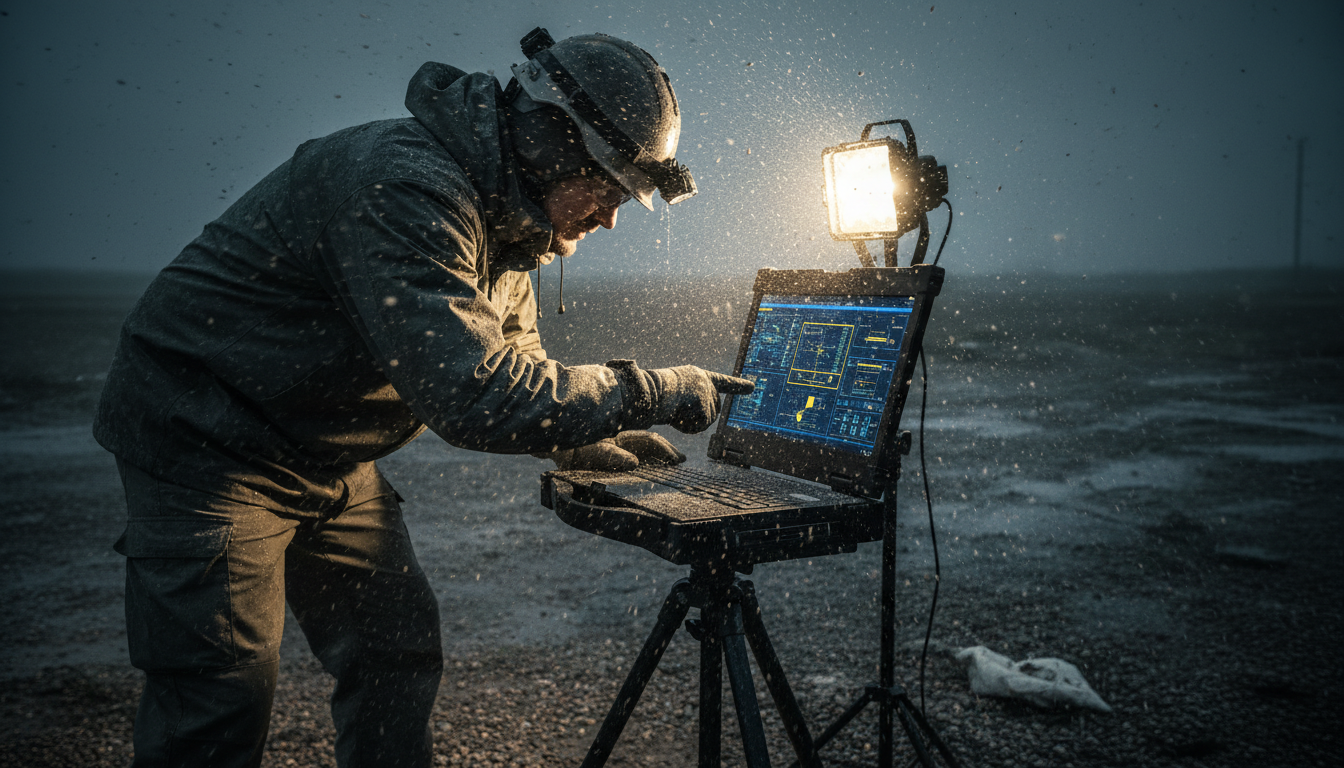
Rugged display technology has become essential across many industries that operate outside traditional office settings.
Military operations require reliable technology that works in unpredictable environments. Rugged Portable Displays are frequently used in mobile command systems, tactical vehicles, and field communication setups.
Their durability ensures that mission-critical data remains accessible during transport, deployment, and field missions.
Field engineers rely on digital diagnostics, system monitoring, and technical schematics while working on complex equipment. Rugged displays allow them to access these tools directly at the work site.
Instead of returning to an office or control room, engineers can troubleshoot systems in real time, improving efficiency and reducing downtime.
Oil and gas operations often take place in some of the harshest environments on earth. Offshore rigs, remote drilling sites, and desert operations all demand durable equipment.
Rugged Portable Displays provide reliable monitoring interfaces for drilling systems, environmental sensors, and safety controls.
Emergency response teams rely on technology to coordinate operations during disasters. Portable command centers often use rugged displays to monitor communication systems, mapping software, and live data feeds.
Because these displays are designed for mobility and durability, they can be deployed quickly in unpredictable environments.
When teams work in demanding environments, equipment reliability directly affects productivity and safety. Rugged Portable Displays are built to support field professionals who depend on real-time data, diagnostics, and visual monitoring outside controlled environments.
Their advantages go far beyond durability. They improve mobility, operational efficiency, and decision-making in the field.
Field teams rarely operate from a fixed workstation. Engineers move between equipment areas, military personnel deploy mobile command systems, and emergency responders establish temporary operations centers.
Rugged Portable Displays are designed for this kind of mobility. Their compact and reinforced design allows them to be transported easily between locations without risking damage.
Many models include features such as:
This portability allows professionals to bring computing power directly to the field instead of returning to a control room.
Access to information at the right moment improves efficiency in any technical operation. When engineers and technicians can view diagnostics, system dashboards, and schematics directly at the equipment site, troubleshooting becomes much faster.
Rugged Portable Displays enable teams to:
This reduces delays and minimizes operational downtime.
In many industries, equipment failure can cost thousands of dollars per hour. Oil drilling systems, industrial manufacturing lines, and military operations all rely on continuous system monitoring.
A durable display system ensures operators always have access to important information. Because Rugged Portable Displays are designed to handle vibration, temperature extremes, and physical impact, they remain functional in environments where standard monitors would fail.
This reliability helps organizations avoid unnecessary equipment downtime and maintain operational continuity.
Modern industrial systems rely heavily on digital monitoring platforms. Sensors collect data about machine performance, safety systems, environmental conditions, and network operations.
Rugged display systems allow technicians to monitor this data directly in the field. Instead of waiting for updates from a central control center, operators can analyze system performance instantly.
Real-time monitoring helps teams detect potential problems early and respond quickly to prevent system failures.
Many organizations initially consider using standard consumer or office monitors in field operations. While these displays may work temporarily, they are not built for demanding environments.
The differences between Rugged Portable Displays and regular monitors become clear when used in real-world conditions.
Standard monitors are designed for indoor office use. Their plastic housings and delicate internal components cannot withstand constant movement, vibration, or physical impact.
Rugged displays use reinforced metal or industrial-grade housings that protect sensitive components during transport and operation.
Office monitors cannot handle dust, moisture, or extreme temperatures. Even small environmental exposures can damage internal circuits.
Rugged displays include sealed enclosures and specialized materials that allow them to operate safely in harsh industrial environments.
Commercial monitors typically offer brightness levels designed for indoor lighting conditions. Under direct sunlight, their screens become difficult or impossible to read.
Rugged Portable Displays include high-brightness panels that remain visible even in bright outdoor environments.
Because rugged systems are built with stronger materials and tested for extreme conditions, they typically last much longer in field environments. Organizations often experience fewer hardware failures and reduced maintenance costs.
Choosing the right rugged display requires careful evaluation. Different industries and applications may require specific features or performance capabilities.
Understanding these factors helps organizations select the best solution for their operational needs.
Screen size should match the intended use case. Field engineers who need to view detailed schematics may benefit from larger displays, while mobile technicians may prefer smaller screens that are easier to transport.
Resolution is equally important. Higher resolution displays provide sharper images, making it easier to read technical diagrams, data dashboards, and system controls.
Protection ratings indicate how well a device can resist environmental hazards. Many rugged displays are designed to protect against dust, moisture, and water exposure.
For outdoor or industrial environments, choosing a display with strong environmental protection ensures long-term reliability.
Industrial systems often require multiple connection types to interface with different hardware platforms.
Common connectivity features include:
Flexible connectivity allows rugged displays to integrate easily with existing industrial systems.
Some rugged displays are designed for handheld or portable workstation use, while others are intended to be mounted inside vehicles, racks, or mobile command centers.
Choosing the right mounting and portability options ensures the display integrates smoothly with the operational environment.
Before purchasing a rugged display, organizations should confirm compatibility with existing computing infrastructure. This includes ensuring support for operating systems, industrial control software, and hardware interfaces used in the field.
Proper compatibility ensures the display can be deployed quickly without requiring major system modifications.
Industrial computing is evolving quickly. Modern operations rely on real‑time data, automation systems, and remote monitoring tools. As these technologies grow, the need for dependable field hardware becomes even more important. This is where Rugged Portable Displays continue to play a critical role.
Emerging technologies such as edge computing, smart infrastructure, and AI‑driven monitoring systems require reliable interfaces in locations that are far from traditional offices. Engineers and technicians must be able to visualize complex system data directly in the field.
Rugged display technology is advancing to meet these needs. New generations of rugged portable monitors are being designed with improved processing compatibility, better connectivity, and enhanced visibility in extreme environments.
Several trends are shaping the future of rugged display technology.
Edge computing allows data to be processed closer to where it is generated. Instead of sending all data to centralized data centers, industrial systems can analyze information locally.
Rugged Portable Displays serve as the human interface for these edge computing environments. Field operators can view analytics dashboards, sensor readings, and system alerts directly at the source of the data.
This reduces response time and improves decision‑making in critical operations.
Cities and infrastructure systems are becoming smarter. Transportation networks, energy grids, and environmental monitoring systems now rely on advanced digital platforms.
Field technicians responsible for maintaining these systems require portable computing tools that can operate reliably outdoors. Rugged display solutions allow them to monitor infrastructure systems while working in challenging environments such as highways, tunnels, and power facilities.
New rugged displays increasingly support modern connectivity options, including high‑speed networking and integration with industrial control systems.
This allows teams to:
As industries adopt more connected technologies, rugged display systems will become even more essential for field operations.
Organizations that operate in harsh environments need reliable hardware suppliers with experience in industrial computing solutions.
Professionals looking for durable and high‑performance Rugged Portable Displays can explore specialized industrial display providers that design equipment specifically for demanding environments.
For organizations searching for professional‑grade display systems, visit rackmountsales to explore a range of rugged portable displays and industrial computing solutions designed for field operations.
Choosing a trusted provider ensures that the display hardware meets the performance, durability, and compatibility requirements needed for long‑term industrial use.
Harsh environments place extreme demands on technology. Dust, vibration, temperature changes, and outdoor conditions can quickly damage standard equipment. Organizations that depend on reliable data access in the field cannot risk hardware failures caused by fragile displays.
Rugged Portable Displays provide the durability, portability, and performance needed for these challenging environments. Their reinforced construction, high‑brightness screens, and environmental protection allow professionals to operate confidently in locations where standard monitors would fail.
From military operations and industrial engineering to energy exploration and emergency response, rugged display systems support critical missions around the world. As industrial technology continues to evolve, the importance of dependable field computing tools will only increase.
Investing in rugged display solutions helps organizations improve operational efficiency, reduce downtime, and maintain reliable access to important system data wherever the job takes them.
Rugged portable displays are designed for environments where regular monitors cannot operate safely. They are commonly used in military operations, industrial field engineering, oil and gas exploration, emergency response, and infrastructure maintenance. These displays allow professionals to access critical data and monitoring systems directly in the field.
Many rugged portable monitors are designed with sealed enclosures that protect internal components from dust and water exposure. The level of protection varies by model, but most rugged displays include environmental protection ratings that make them suitable for outdoor and industrial environments.
Several industries depend on rugged display technology, including defense, aerospace, oil and gas, construction, industrial automation, transportation infrastructure, and disaster response operations. Any industry that operates in harsh environments can benefit from rugged portable display systems.
Regular monitors are designed for office environments with stable temperatures and minimal physical movement. Rugged portable displays are built with reinforced frames, sealed enclosures, shock resistance, and high‑brightness screens so they can function reliably in extreme conditions such as vibration, dust, moisture, and outdoor sunlight.
Yes. Rugged display systems are engineered to operate within wider temperature ranges than standard monitors. This allows them to function reliably in both freezing outdoor environments and high‑temperature industrial settings.

Industrial LCD displays are built for heavy-duty environments like factories, warehouses, and outdoor terminals. They can handle heat, dust, vibration, and long operating hours.
Militarydev411

Downtime costs more than most people expect. When LCD monitor drawers fail inside a rack, teams lose access, waste time, and risk bigger hardware issues. Proper care keeps LCD monitordev411

A rack mount monitor with KVM combines display, keyboard, and mouse into a single unit. This all-in-one design lets IT teams access multiple servers without juggling separate devices.dev411










We are so confident you will be satisfied with our products that we offer a 100% satisfaction guarantee


