




24/7 Support
Fast, professional support




















At first glance, the answer might seem straightforward: military displays are simply tougher. But the real difference comes down to how they're constructed, tested, and specified for their intended environment.
This guide compares key factors including shock and vibration, temperature, EMI/EMC protection, and MIL-STD requirements, while exploring when commercial hardware may be sufficient.
Let's look beyond the label and into the specification.
At a glance, military and commercial rackmount displays may appear to offer many of the same features, such as high-resolution screens, multiple connectivity options, and rack-mounted installation. The key difference is the environment each type of display is designed to operate in. Commercial displays are typically built for controlled environments where temperature, vibration, and physical impact are relatively predictable, while military rackmount displays are engineered to withstand more demanding operating conditions.
Let’s compare both rackmount displays:
Commercial rackmount displays are usually designed for stable, controlled environments, where extreme environmental stresses are unlikely. Common applications include:
For these settings, commercial equipment can provide reliable performance without the additional ruggedisation required for field or mission-critical applications. Features such as screen size, resolution, connectivity and ease of installation may be the primary considerations.
However, a display that performs well in a controlled environment may not be suitable when exposed to significant shock, vibration, temperature fluctuations or electromagnetic interference. This is where the requirements begin to differ.
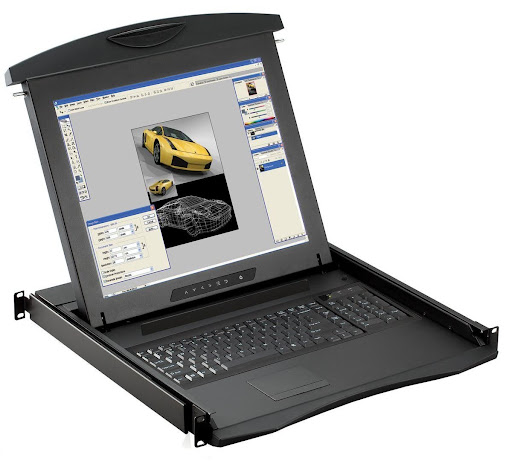
Commercial Rackmount LCD Display
Military rackmount displays are designed for more demanding environments, where equipment may be exposed to conditions that standard commercial hardware is not built to withstand. Common applications include:
For these settings, military rackmount displays may require additional protection against shock, vibration, temperature extremes, dust, moisture and electromagnetic interference. Features such as ruggedised construction, wider operating temperature ranges, EMI/EMC protection and compliance with relevant military standards can therefore become key considerations.
The distinction is not simply that a military display is stronger. It is whether the equipment has been designed, tested and specified to continue operating reliably under the environmental and operational stresses expected throughout its service life.
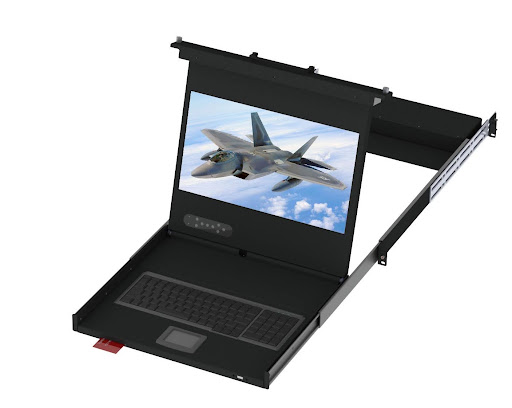
Military Rackmount Monitor Drawer
Need a reliable display for a professional, industrial, or military environment?
At Rackmountsales, we supply a wide range of rackmount monitors, including rugged military rackmount displays, designed to meet the demands of different operating environments.
✓ Built for Your Environment: Choose standard rackmount monitors for professional applications or ruggedised military displays for demanding defence environments
✓ Flexible Solutions: Select from different screen sizes, configurations and features to suit your specific requirements
✓ Expert Guidance: Work with our specialists to find the right rackmount display for your application, whether you need a standard or military-grade solution
Explore our rackmount monitors today →
Military and commercial rackmount displays can perform similar functions, but they are designed for different operating environments. Standard rackmount displays are generally suited to controlled professional settings, while military displays are built with more demanding conditions and mission-critical applications in mind.
Let’s compare their features:
| Feature | Commercial Rackmount Displays | Military Rackmount Displays |
|---|---|---|
| Typical environments | Data centres, offices, control rooms and broadcast facilities | Defence, field, vehicle-mounted and other mission-critical applications |
| Construction | Designed for professional and controlled environments | Ruggedised construction designed for demanding conditions |
| Shock & vibration | Suitable where exposure is limited | Designed to withstand greater shock and vibration |
| Operating temperature | Generally suited to controlled temperatures | Options available with wider operating temperature ranges |
| Dust & moisture | Protection varies by product | Options with additional IP/NEMA protection |
| Physical protection | Standard chassis and bezels | Reinforced chassis, bezels and mounting options |
| EMI/EMC | Depends on the individual product | Options available with additional EMI/EMC protection |
| Military standards | Not typically designed around MIL-STD requirements | Certain models may be tested to relevant MIL-STD requirements |
| Best suited to | Controlled professional and commercial environments | Demanding defence and mission-critical environments |
Sometimes, but it depends on the application and operating environment. Commercial rackmount displays can provide reliable performance where conditions are controlled, and there are no specific military compliance requirements. However, more demanding environments may require the additional ruggedisation, environmental protection and testing offered by military-grade displays.
A commercial rackmount display may be appropriate for applications with:
In these situations, a commercial display can provide the required functionality without the additional specifications needed for harsher environments.
Military rackmount displays may be more suitable where equipment needs to withstand demanding conditions, including:
For defence projects, it's important to match the display's specifications and testing to the requirements of the application rather than assuming that any rugged or military-labelled display will be suitable.
Commercial hardware isn't necessarily unsuitable or unreliable. The risk comes from using equipment in conditions it wasn't designed to withstand. A display exposed to significant vibration, extreme temperatures, or other environmental stresses may experience problems if it doesn't have the appropriate protection.
Choosing unsuitable equipment can potentially result in:
For mission-critical applications, it's therefore worth considering the total cost of ownership, rather than focusing solely on the initial purchase price. A lower-cost display may offer savings upfront, but premature failure or downtime can increase costs over its service life.
Still choosing which rackmount display is best for you? Consider the following factors before making your decision:
Considering these factors can help you choose a rackmount display that meets the demands of your application and provides reliable performance where it matters most.
Choosing between military and commercial rackmount displays comes down to matching the display to your operating environment, performance requirements and risk level. Choosing the right solution from the outset can help improve reliability, minimise downtime and ensure your equipment is built for the conditions it will face.

Industrial LCD displays are built for heavy-duty environments like factories, warehouses, and outdoor terminals. They can handle heat, dust, vibration, and long operating hours.
Militarydev411

Downtime costs more than most people expect. When LCD monitor drawers fail inside a rack, teams lose access, waste time, and risk bigger hardware issues. Proper care keeps LCD monitordev411

A rack mount monitor with KVM combines display, keyboard, and mouse into a single unit. This all-in-one design lets IT teams access multiple servers without juggling separate devices.dev411










We are so confident you will be satisfied with our products that we offer a 100% satisfaction guarantee


